
The story
Sixteen years in Bagru.
From a term abroad in 2009 to a pause in 2026. The long version, with the photographs.
Go and see.
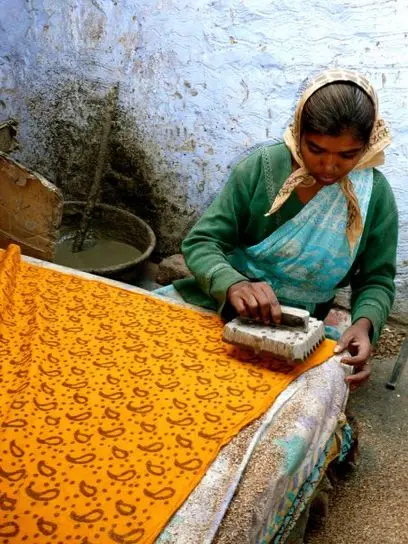
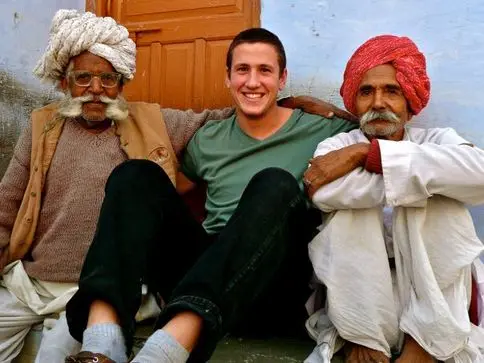
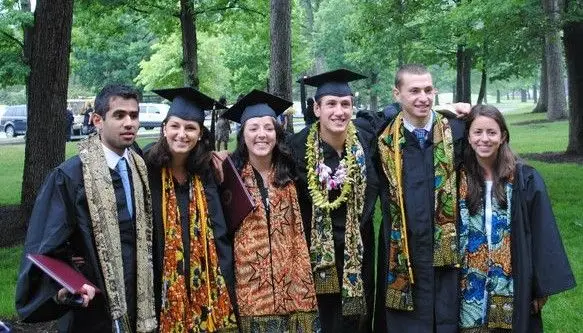
Jeremy had first seen India at twelve, backpacking Karnataka with his parents and two brothers. He went back in his final year at Union College with Harold Fried, who ran the college’s social entrepreneurship programme, and Alicia DeNicola, the anthropology professor. One day, travelling through Rajasthan, the group stopped in a village called Bagru.
Alicia DeNicola endorsed his application for the fellowship, and she made the introductions to the hosts in the Bagru community.
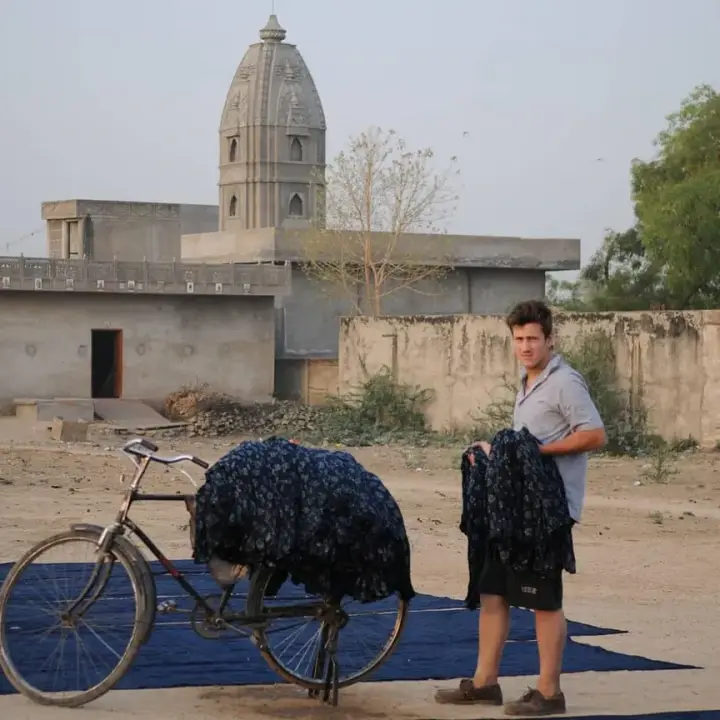
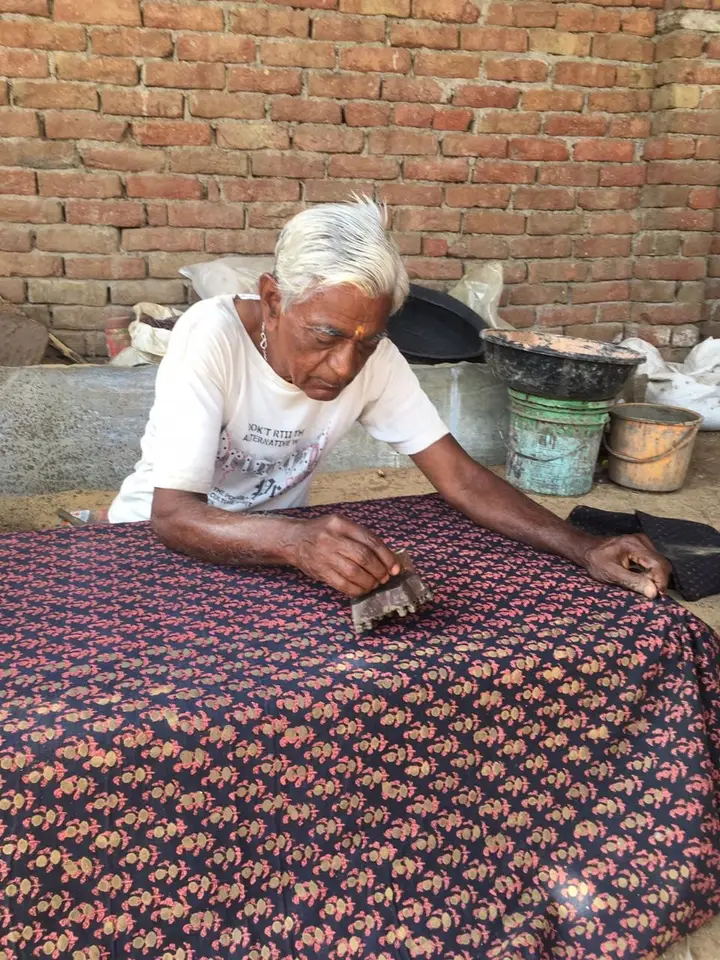
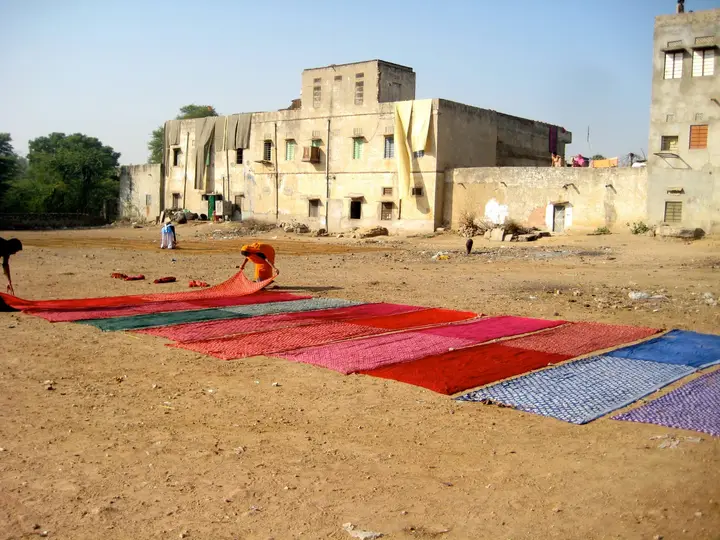
What they found was hand-block printing: a technology that reaches back four thousand years to the Harappan civilisation, still practised at the kitchen door. Carved wooden blocks, trays of colour, and lengths of cloth spread across open ground to dry in the sun.
It was the trip where the light bulb went off.
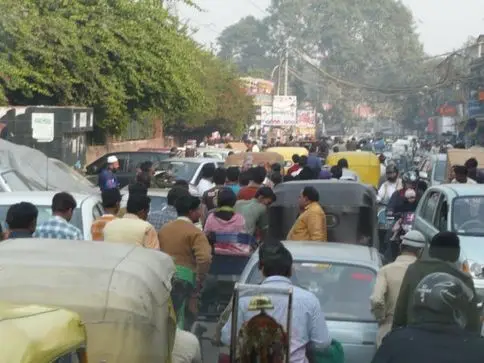
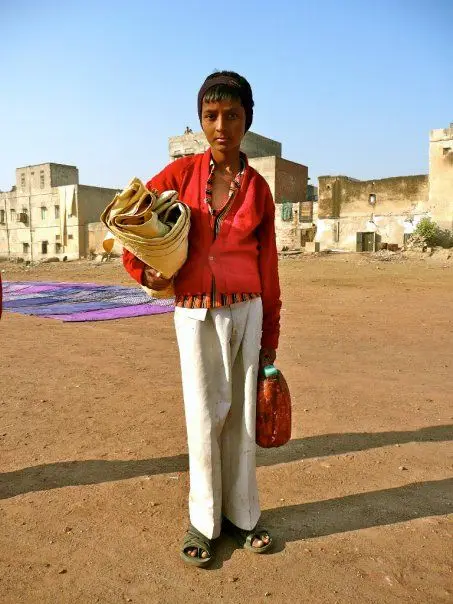
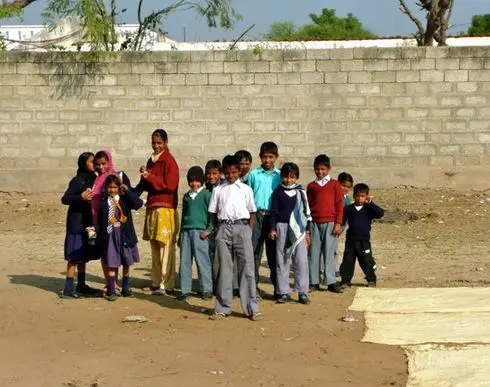
A one-way ticket.
Union College offers graduating students a Minerva Fellowship: ten thousand dollars to go abroad for a year and build some kind of hybrid business, part enterprise and part social mission. Jeremy applied to live in Bagru, work alongside the printers, and share what he knew about marketing and the web. He was awarded the grant.
Two people at the college made the fellowship possible: Professor Harold Fried, and Tom McAvoy, who directed the programme.
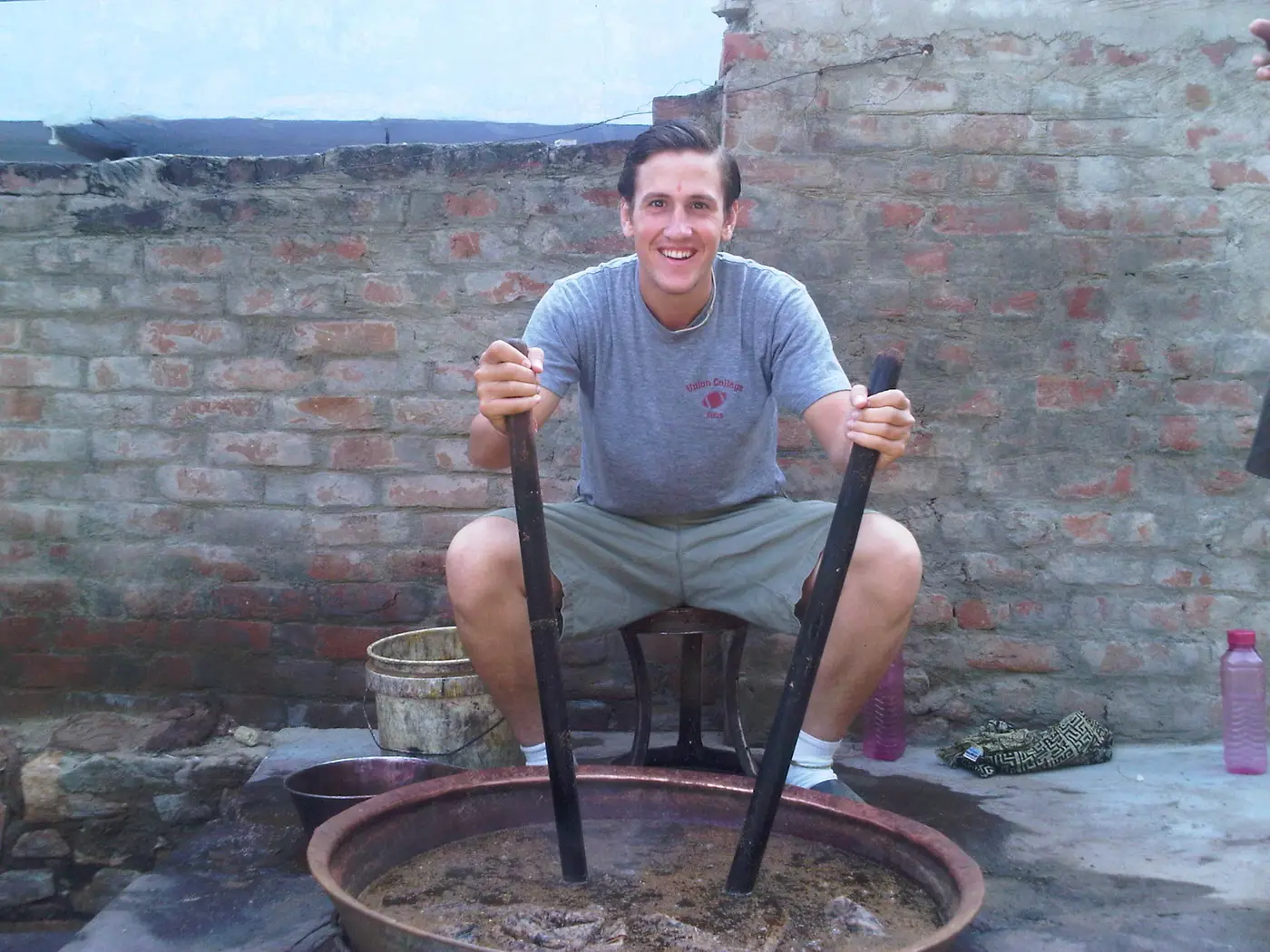
The other fellows scattered across the world. He went to India with a one-way ticket, moved into the village, and started learning the craft from the inside: stirring dye vats, carrying cloth to the drying ground, sitting with the block carver.
Seven rupees a metre.
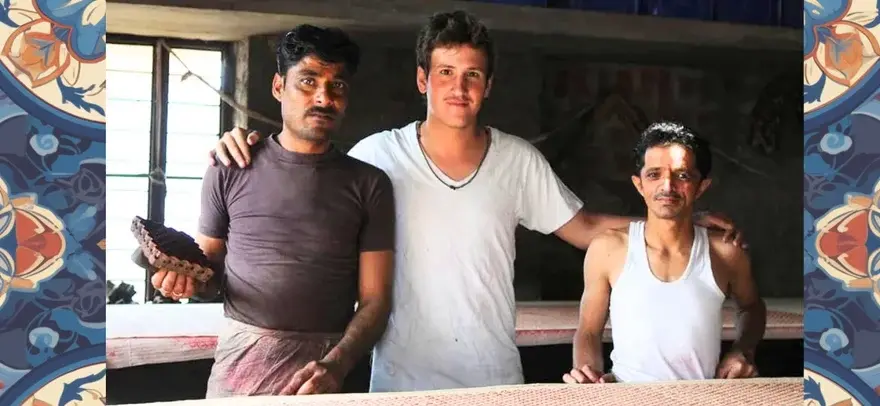
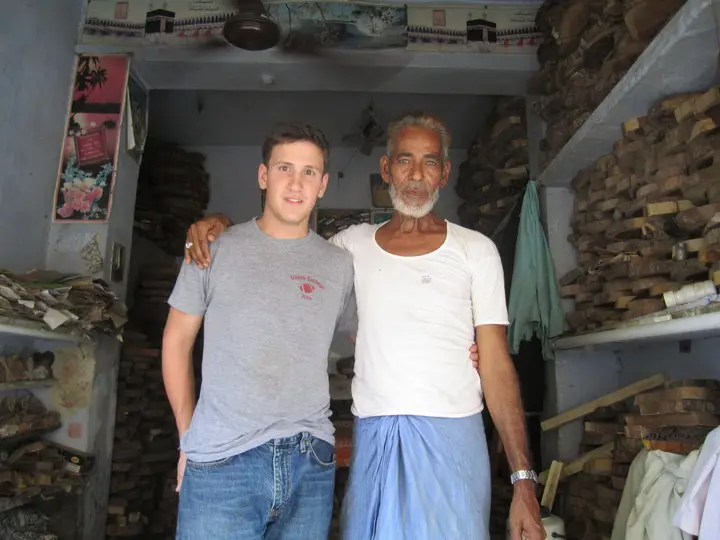
The printers had the skill and the four-hundred-year method. What they did not have was the market. Fabric and designs arrived from a trader; the family processed, printed and finished the cloth; and it went back out, paid by the metre. Seven rupees a metre.
From there it passed through a wholesaler, an exporter, an importer, an agent, a designer and a retailer before it reached the person who would wear it. Each step added margin, language, and distance, until the family who made the cloth was the one nobody downstream could name.
Seventy years of India opening to trade had put a chain of people between the artisan and the buyer, each capitalising on skills of marketing and language the printers had never been given.
Every step adds margin, and language, and distance, until the person who made the cloth is the one nobody can name.
Bagru Textiles. Know your source.
The answer was to cut out the middleman and hand digital marketing and commerce straight to the home-based artisans, so that they could find their own markets. Then name the company after the place and what they do. Nobody outside Rajasthan knew what Bagru was, so Bagru Textiles put it on the door.
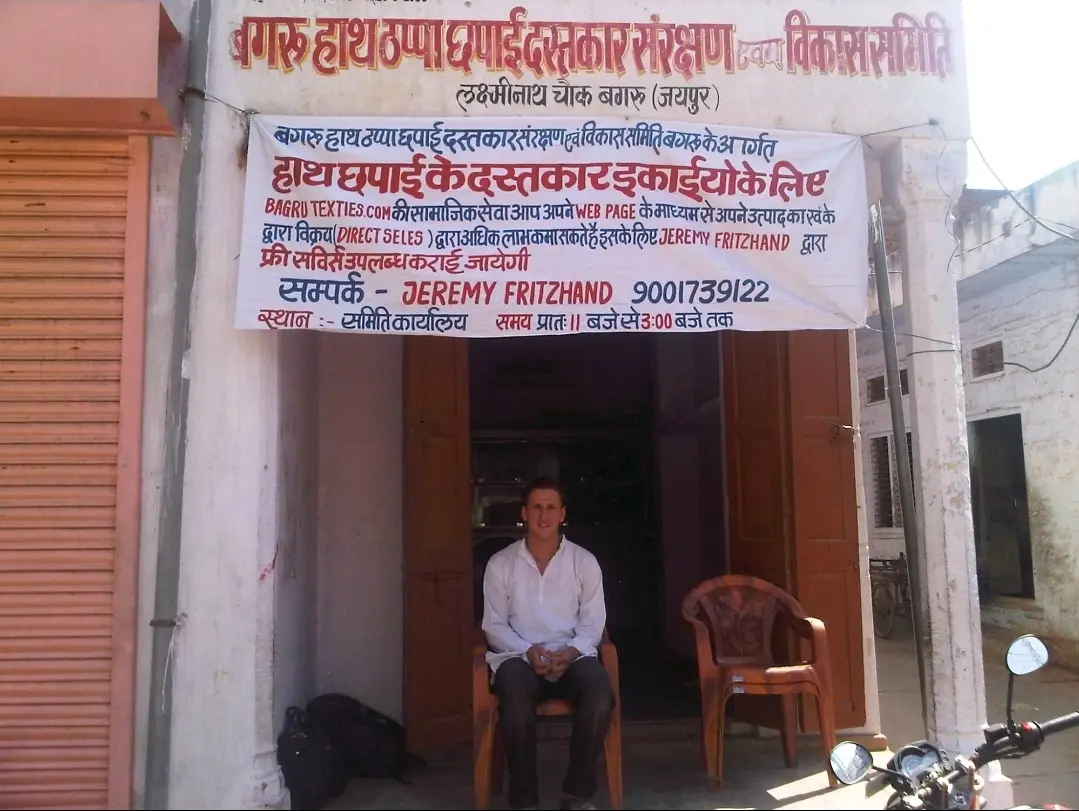
A hand-painted banner outside the office of the Bagru hand-block printing artisans’ society announced the offer in Hindi: through bagrutextiles.com, any printing unit could have its own web page and sell directly, and the service was free. Contact Jeremy Fritzhand. Office hours, eleven to three.
Two principles held from the start. Know your source: the printer is named, never anonymised behind a label. And build with what they have: no retraining, no redesign of the craft, no asking a family to become something other than what it already was.
Bagru Textiles was, and still is, an independently owned artisan enterprise. Jeremy worked in it day to day until the end of 2012; it thrived, and it thrives today, under the printers who own it. A fifty-thousand-dollar endowment to Union College meant the fellowship kept sending graduates to Bagru after he left.
Emily LaCroix held the fellowship in Bagru in 2011 and carried the work through her year. Jessica Sarrantonio, Eric Spector, David Masterson and Davis Cutter held it in the years that followed. Each of them lived in the village and worked alongside the printers, and the enterprise is as much theirs as anyone’s.
Know your source: the printer named, not anonymised behind a label.

The years the industry had to answer for itself.
After Bagru came an MBA at Thunderbird, where Jeremy was president of the student body and spent an exchange term at the Indian School of Business. Then a job at MGF Sourcing: supply-chain management for a company moving billions of dollars of American retail through factories in Hong Kong, China, Sri Lanka and Bangladesh.
It was the volume end of the trade, and the years the industry was forced to answer for itself. The Rana Plaza factory collapsed in Savar, Bangladesh, in 2013. “Who made my clothes?” went from a slogan to a question a serious brand had to be able to answer.
His heart was still in a village with a four-hundred-year answer.
Back to Bagru. Studio Bagru.
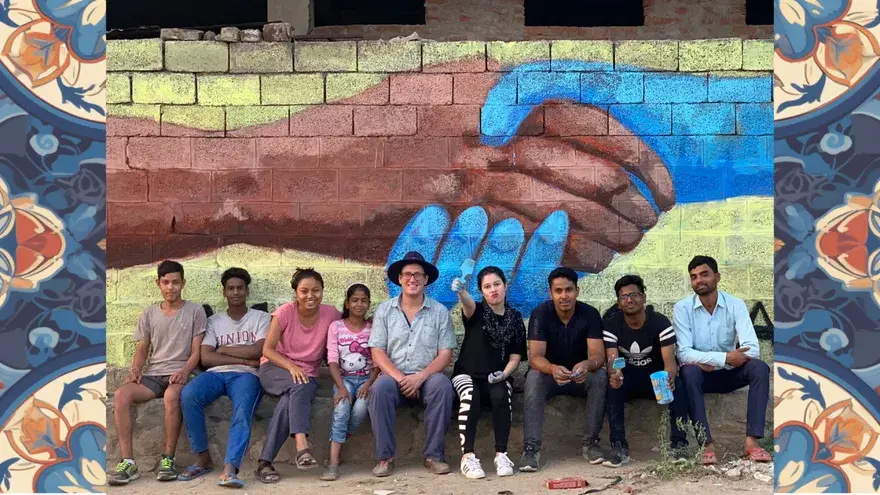
By 2016 Bagru Textiles was thriving as an enterprise owned and run by the artisans. The question was how to scale that impact beyond one company. Jeremy returned to Bagru and co-founded Studio Bagru to answer it, with Davis Cutter, who had held the fellowship in Bagru himself, and Curt Myers.
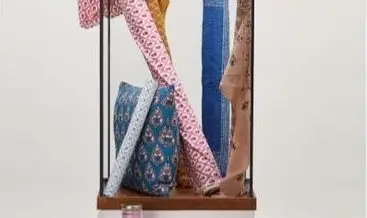
The studio kept telling the story, kept making cloth, and shipped to more than fifty countries, working B2B the whole way with fashion designers, hotels and houses abroad. Cushions, quilts, robes, totes, tablecloths and shirting, designed with clients abroad and printed by the same families in the same village.
It was never about one company. The studio introduced buyers to other family-owned workshops in Bagru and showed them how it had started and how it told the story. Over the years more than two hundred artisans took part in business-development training.
The goal was independence. Better business owners, not better suppliers.
Chhipa, the printers’ surname, is also the word for what they do: to print.
The goal was independence: better business owners, not better suppliers.

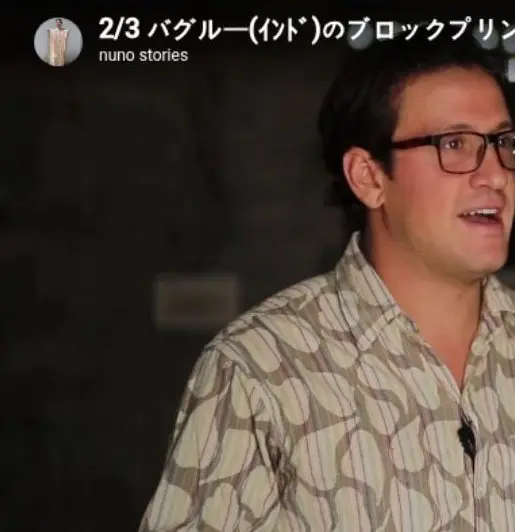
The journalists came to the village.
The studio never bought coverage. Jeremy wrote to his network, to publishers and to journalists, and then got them to Bagru to see the history for themselves.
The New York Times came for “The Ancient Art of Jaipur Block Printing”. Forbes wrote that women in India were putting a face to your clothes. The Financial Times followed a designer’s journey to India’s “Mecca of printing”. The Washington Post listed Bagru among the destinations where you can craft your own memento, National Geographic asked how to spot a fake souvenir, and Adventure.com met the families keeping Rajasthani block printing alive.

The printing tables opened.
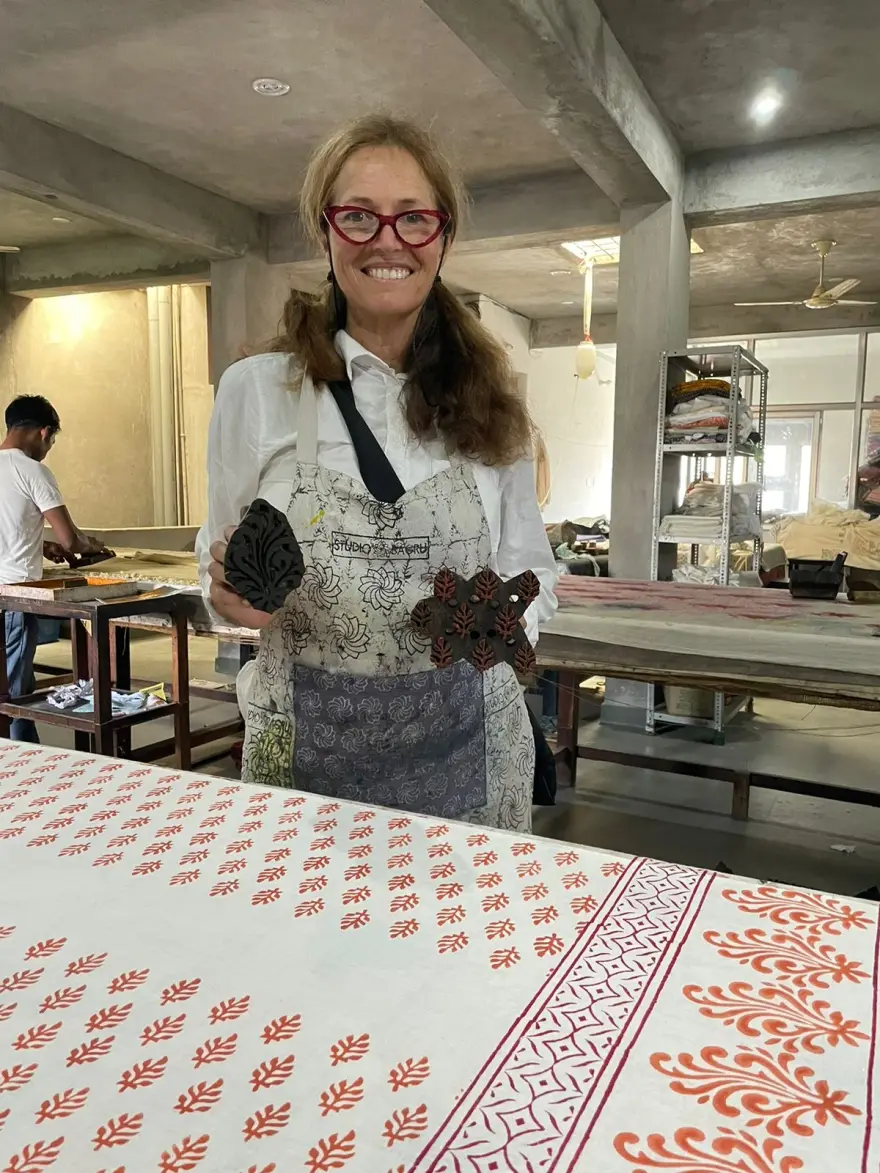
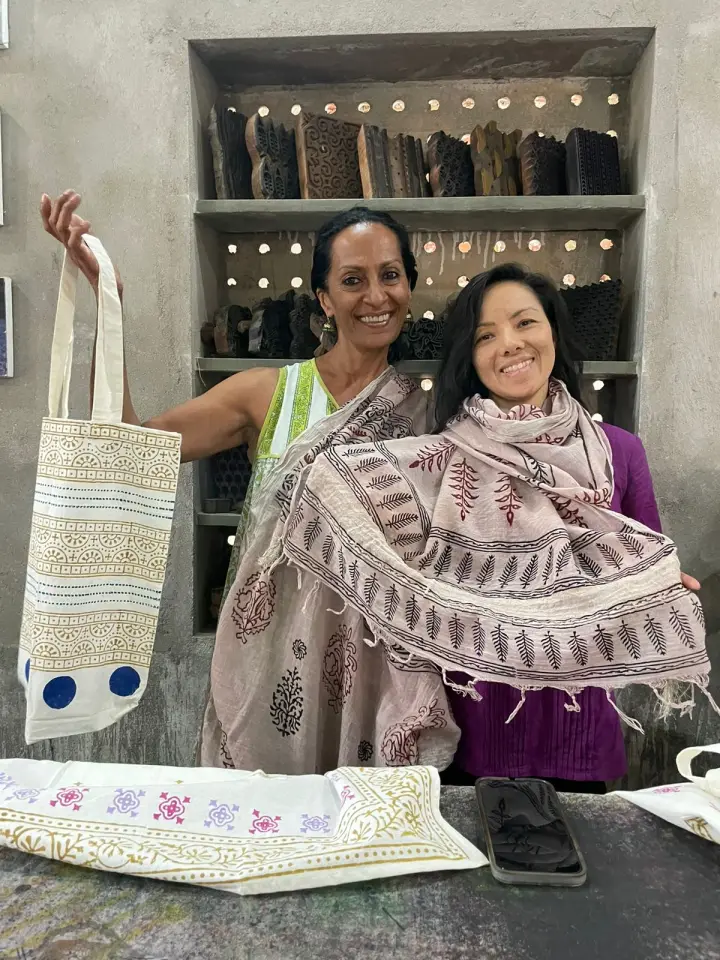
Visitors had always asked to try the blocks. So the studio opened its tables: a single day walking Bagru’s Fields of Colour, visiting the block carvers and dyers, and printing a tote, a scarf or a rug of your own; or a full week inside the craft, setting up an indigo vat, printing dabu resist, mixing natural pigments, and finishing with a day of jahota printing in the neighbouring village, all alongside master printer Govind ji.
The classes were run by a family that has printed for seven generations, with lunch cooked at home. Guests wrote about the welcome as much as the printing. Tripadvisor named Studio Bagru a Travellers’ Choice winner in 2020, and again in 2024 and 2025, placing it in the top ten per cent of attractions worldwide.
The year the order book stopped.
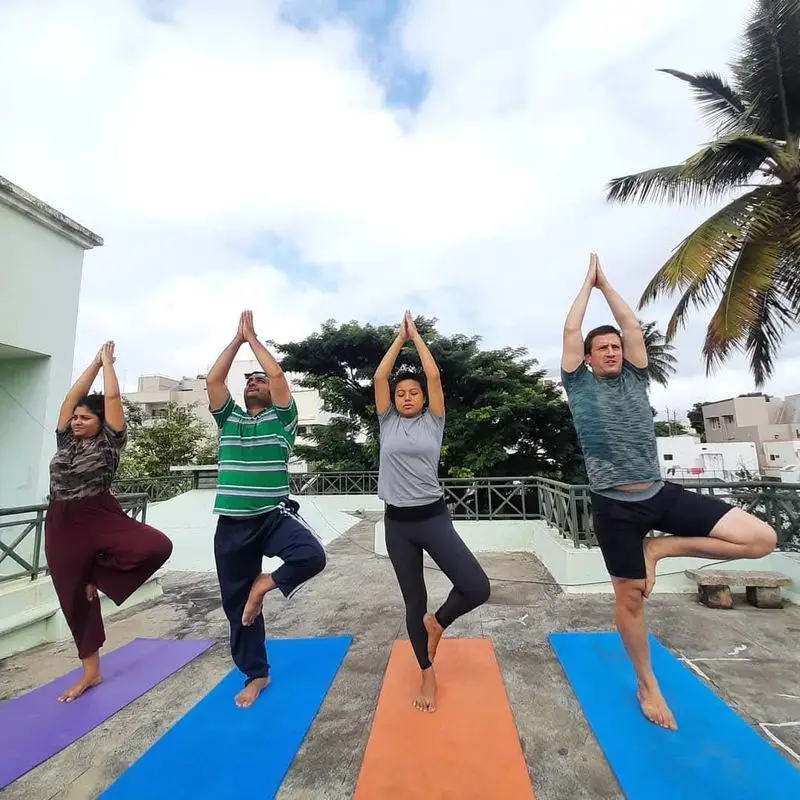
Covid hit, and the order book stopped. When the airport reopened, Jeremy and his fiancée, who is from Assam, flew to Mysore and completed a yoga teacher training. They married in Nagaon, Assam, in 2021, and moved to Cincinnati later that year.
The studio kept its printing tables.
The pause, and the guide.
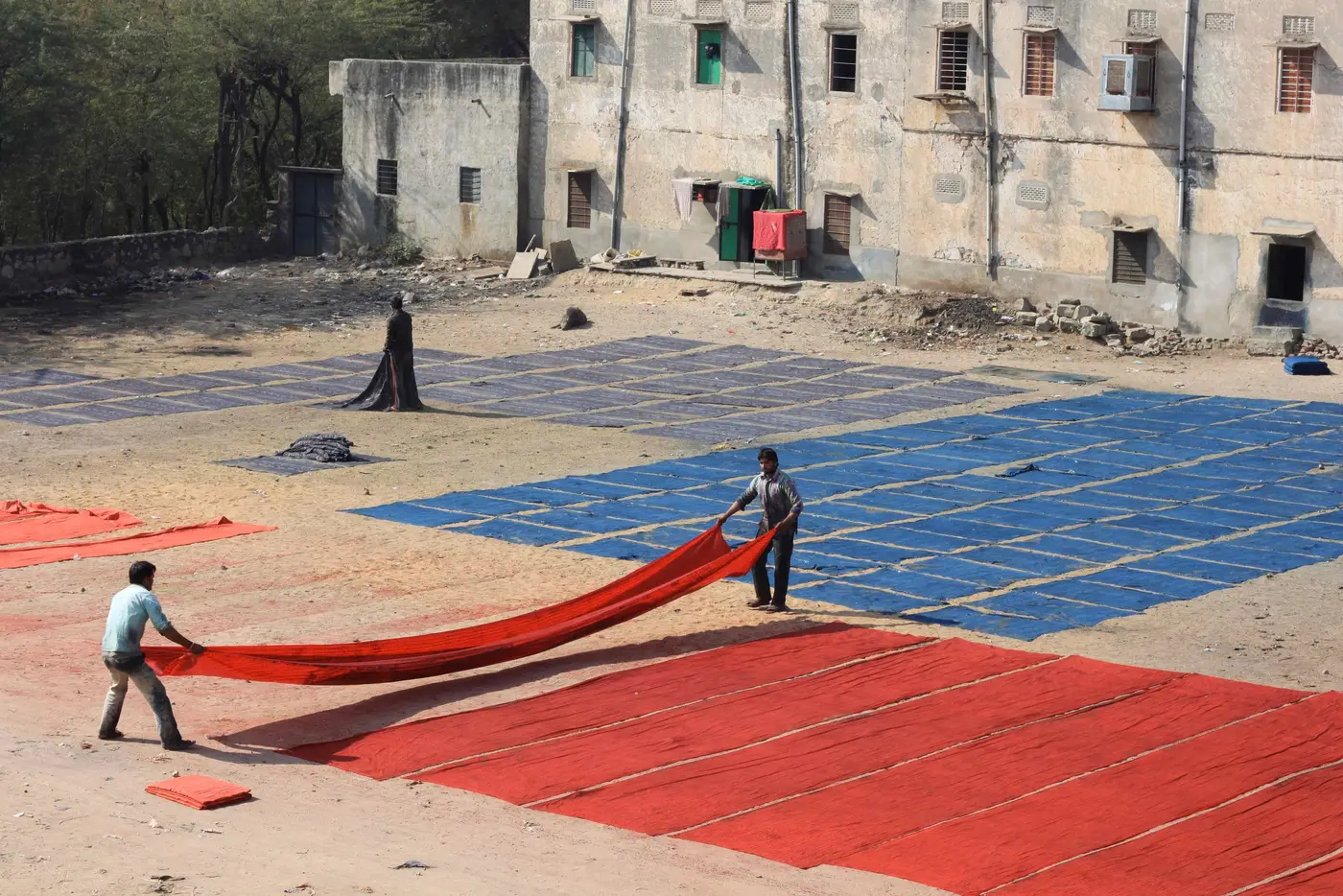
Sixteen years after the Minerva Fellowship, Studio Bagru is pausing its business operations. Every order in production will be completed and shipped as agreed. Every class already booked will run. No new orders or bookings are being taken.
The site you are reading becomes two things. An index of artisan businesses, so that a buyer can find the workshop and the person behind the cloth and write to them directly. And a guide for buyers: how printing in Bagru actually works, how to brief a workshop, what fair timelines and prices look like, and what to expect from cloth made by hand.
The middle is where the studio used to stand. It is no longer where it is needed.
When the work is done, the people will say: we have done this ourselves.
Lao Tzu
With thanks
The people who carried it
None of this was one person’s work. The Minerva Fellowship sent graduate after graduate to Bagru, and each of them lived in the village and worked alongside the printers.
Union College
- Harold Fried (opens in a new tab) Professor
- Alicia DeNicola (opens in a new tab) Professor of anthropology
- Tom McAvoy Director, Minerva Fellowship
Fellows who worked in Bagru
Studio Bagru, co-founded 2016
Further reading
Four parts, in Jeremy’s words.
The co-founder’s own account of the same years, published on LinkedIn in four parts.
- Part 01 Opens on LinkedIn in a new tab
Conscious Commerce: From College Grad to Social Entrepreneur
How a college idea became Bagru Textiles, a social enterprise co-founded in a Rajasthani artisan village.
- Part 02 Opens on LinkedIn in a new tab
Crafting a Sustainable Legacy: Studio Bagru’s Journey Across Continents
How Studio Bagru was founded in 2016 to scale the impact beyond one company.
- Part 03 Opens on LinkedIn in a new tab
From Bagru to Cincinnati: Printing a Tapestry of Community and Creativity
Carrying the craft home, and building community through hand block printing in Cincinnati.
- Part 04 Opens on LinkedIn in a new tab
Coming Full Circle and Starting the Circle Again
Returning to where it began, and beginning again.
The next chapter
Where it goes next.
An index of artisan businesses and a guide for buyers, beginning with the block printers of Bagru, Rajasthan.